Podcast beginner guide: Understanding 4.7 million feeds
"The term itself is a generic identifier for a service, not a licensed brand owned by a single entity."
Starting a podcast requires understanding the landscape of digital audio and the technical scale of the medium. This guide provides a foundation for new creators by exploring historical context, market size, and the practicalities of managing a feed.
Key takeaways include understanding the generic nature of the term, recognizing the massive scale of current feeds, and preparing for the competitive reality of regular publishing.

The competitive reality of regular publishing demands that creators maintain a consistent presence to stand out among the vast collection of available content.
What exactly is a podcast?
A person sits at a desk, adjusting a microphone while looking at a screen filled with audio waveforms. This simple act of recording is the heart of modern podcasting.
The term "podcast" is a generic descriptor used to refer to podcasting services. According to the Apple Trademark Department on November 16, 2006, Apple does not object to third-party usage of the generic term to accurately refer to these services, nor does the company license the term.
This means creators can use the name freely to describe their work. Because the term is generic, creators are free to build their brand identity around their specific content rather than being restricted by trademark concerns.
The medium has evolved from early experimental broadcasts to a massive global network. Understanding that the name is not a restricted trademark allows new hosts to build their own unique identities without legal confusion regarding the terminology.
This freedom allows the focus to remain entirely on the quality and uniqueness of the audio content itself.
How large is the current podcast landscape? Podcast beginner guide
At midnight in a quiet studio, I scroll through endless lists of shows, feeling the heavy weight of the massive podcast landscape.
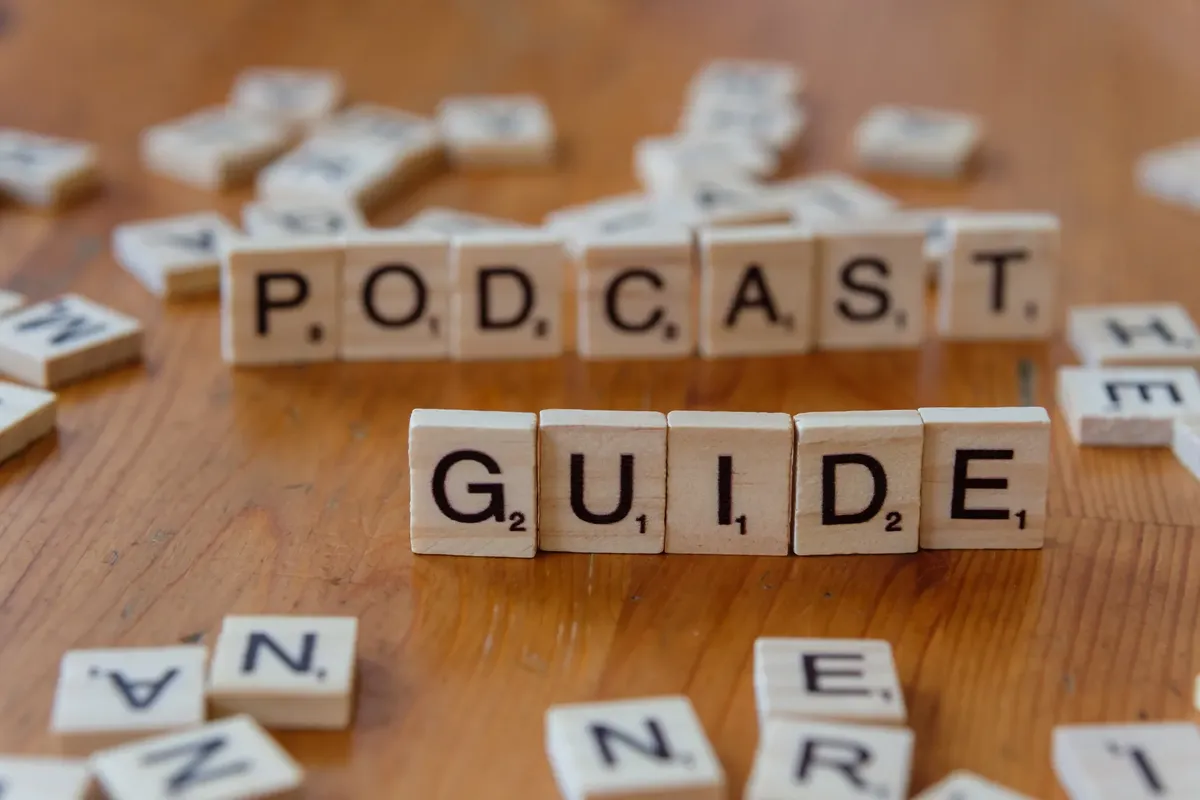
A creator scrolls through a list of thousands of shows, feeling the weight of the competition. The sheer volume of content can be overwhelming for a beginner.
The scale of digital audio is vast and growing. As of August 2026, the Podcast Index listed about 4.7 million podcast feeds. Within that massive collection, about 438,000 feeds had published an episode in the previous 90 days.
This data shows that while millions of feeds exist, only a fraction are actively publishing regular content. This distinction is vital for new operators to understand when planning their own production schedules.
The difference between a feed existing and a feed being active is crucial because listener engagement is tied directly to consistent, recent content delivery. A feed that is listed but inactive will not benefit from the same visibility as one that adheres to a regular publishing cadence.
Where did podcasting actually come from?
An archivist looks through old digital records, tracing the lineage of on-demand audio. The history of the medium provides context for how it became a mainstream staple.
According to the World Service, one of the earliest adopters of on-demand audio from mainstream media was the BBC, with the show Go Digital in August 2001.
The foundations of on-demand audio were laid long before the term became ubiquitous. One of the earliest adopters from mainstream media was the BBC, which featured the BBC World Service show, Go Digital, in August 2001.

Later, on February 2, 2006, Virginia Tech launched the first regular schedule of podcast programming at the university. These early milestones show the transition from experimental broadcasts to structured, scheduled programming.
Learning from these early adopters helps creators understand the shift from simple audio files to organized content schedules. The early experimental broadcasts lacked the defined structure that modern podcasting requires for sustained audience growth.
The shift to structured, scheduled programming provided the necessary framework for the medium to become a mainstream staple.
How do I manage a regular production schedule?
A host checks a calendar, marking dates for recording, editing, and publishing. Consistency is the primary challenge for any independent producer.
According to Virginia Polytechnic Institute and State University, the university launched its first regular schedule of podcast programming on February 2, 2006.
Managing a podcast requires a disciplined approach to content creation. You can follow these basic steps to maintain a healthy feed:
- Define your content type, whether it is interview-based, narrative, or solo commentary. 2. Establish a regular publishing cadence to keep your audience engaged. 3. Monitor your feed activity to ensure you remain among the active creators.

I remember looking at my own first recording schedule and realizing that consistency was harder than the actual recording. A final check of your technical setup and your content calendar will ensure your feed remains active.
Defining your content type requires a clear understanding of the format you wish to maintain, which dictates the necessary production resources. Establishing a regular publishing cadence creates a predictable expectation for the audience, which is a key factor in maintaining engagement.
Monitoring your feed activity involves checking metrics that confirm your content is being delivered and consumed by the intended listeners.
- Plan your content calendar well in advance.
- Batch record multiple episodes in a single session.
- Set aside specific days for editing and distribution.
- In this sequence, the second step is the most time-consuming.
What are the limitations of podcasting growth?
A listener looks at their phone during a commute, searching for something new to hear. Market fluctuations can impact how much content is consumed.
While the industry is massive, listener behavior can change based on external factors. For example, during the COVID-19 pandemic, the number of unique listeners in the US decreased by 15% in the last three weeks of March 2020 due to travel restrictions.

This shows that external shifts can influence listener habits. A limitation of the medium is that listener numbers are often tied to real-world mobility and lifestyle changes, making it harder to predict exact audience sizes.
These external shifts demonstrate that even a well-produced podcast cannot completely insulate itself from global or local conditions affecting audience availability.
The subject here is Podcast beginner guide.
The same subject is also called Start a podcast guide.
The same subject is also called New podcast setup.
The same subject is also called Basic podcast tips.
The same subject is also called How to start podcast.
This part also covers Podcast planning checklist.
This part also covers Recording podcast for free.
This part also covers Podcast launch strategy.
Podcast planning checklist
Related




Comments 0